

Healthcare institutions are intended to be a place for wellness, yet they have become a place associated with the unwell. This dark association creates a negative environment that affects one’s mental and physical health, thus negating the very purpose of going to the doctor. Architecture and design can be used as a valuable tool that refocuses the purpose of healthcare back to wellness.BIOasis does just that.
Nested between the intersection of two major light rail lines, and the bustling Exposition and Crenshaw commercial corridors, the project represents an accessible node of services that are easily reached from both local and distanced points around Los Angeles. As a place largely deprived of green space, BIOasis serves as an oasis that brings wellness to the community through biophilic design.
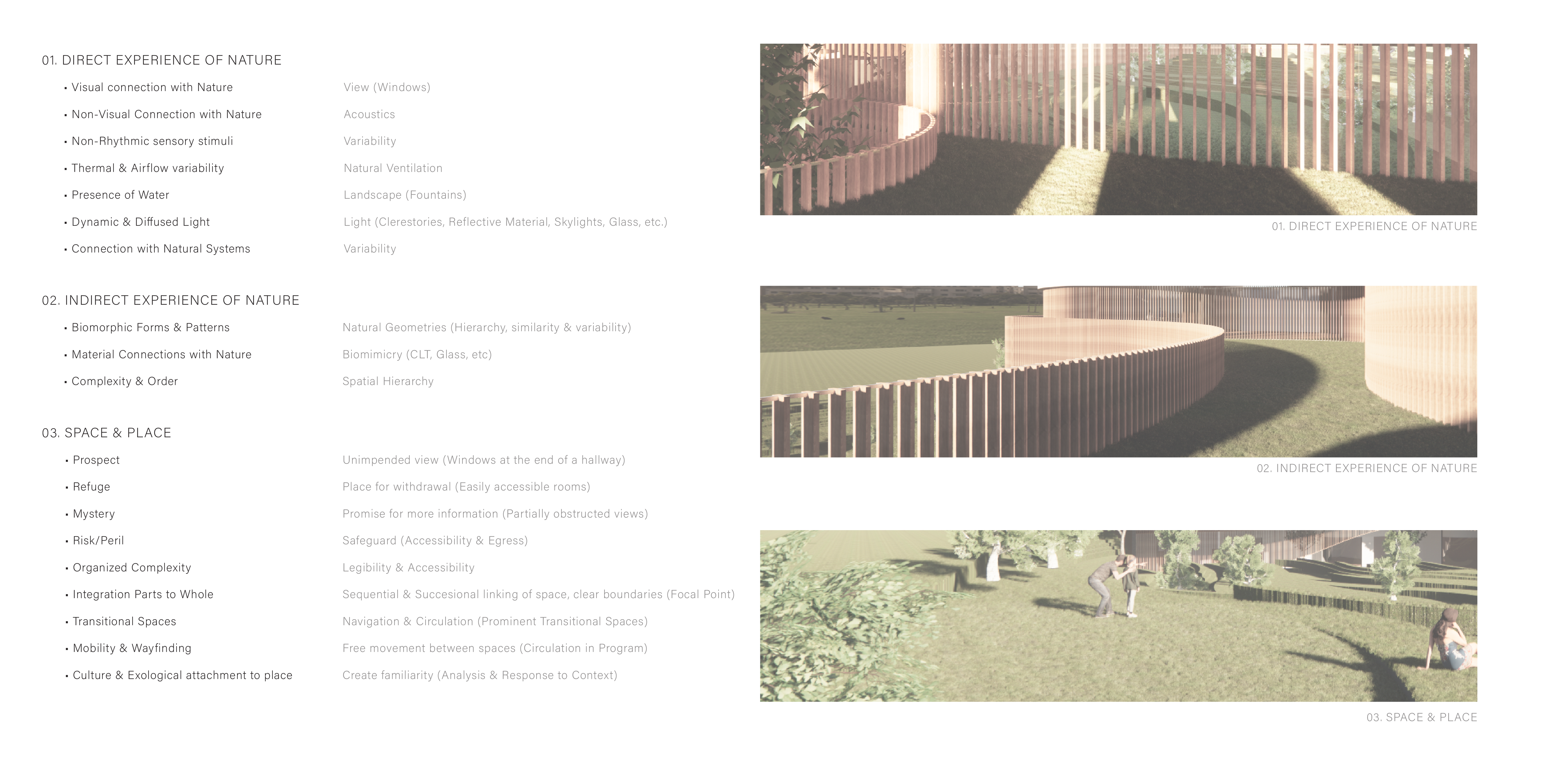
The project implements the three core strategies of Biophilic Design – the Direct Experience of Nature, the Indirect Experience of Nature, and Space & Place. With trees that extrude through the structure and solar panels that permit natural ventilation, we introduce a Direct Experience of Nature. With biomorphic forms that flow in response to circulation and wood slats that mimic the natural environment, we introduce an Indirect Experience of Nature. Lastly, with hallways that create a sense of prospect and areas that allow for refuge, we create a sense of Space and Place. By combining these three categories, which are proven to positively impact stress response, cognitive performance, and emotion & mood, we bring you BIOasis – a Med-Hive with a basis in wellness.
Done in collaboration with cohort member.
Research
The Practice of Biophilic Design
Stephen R. Kellert & Elizabeth F. Calabrese
Site Analysis
Los Angeles, CA. US
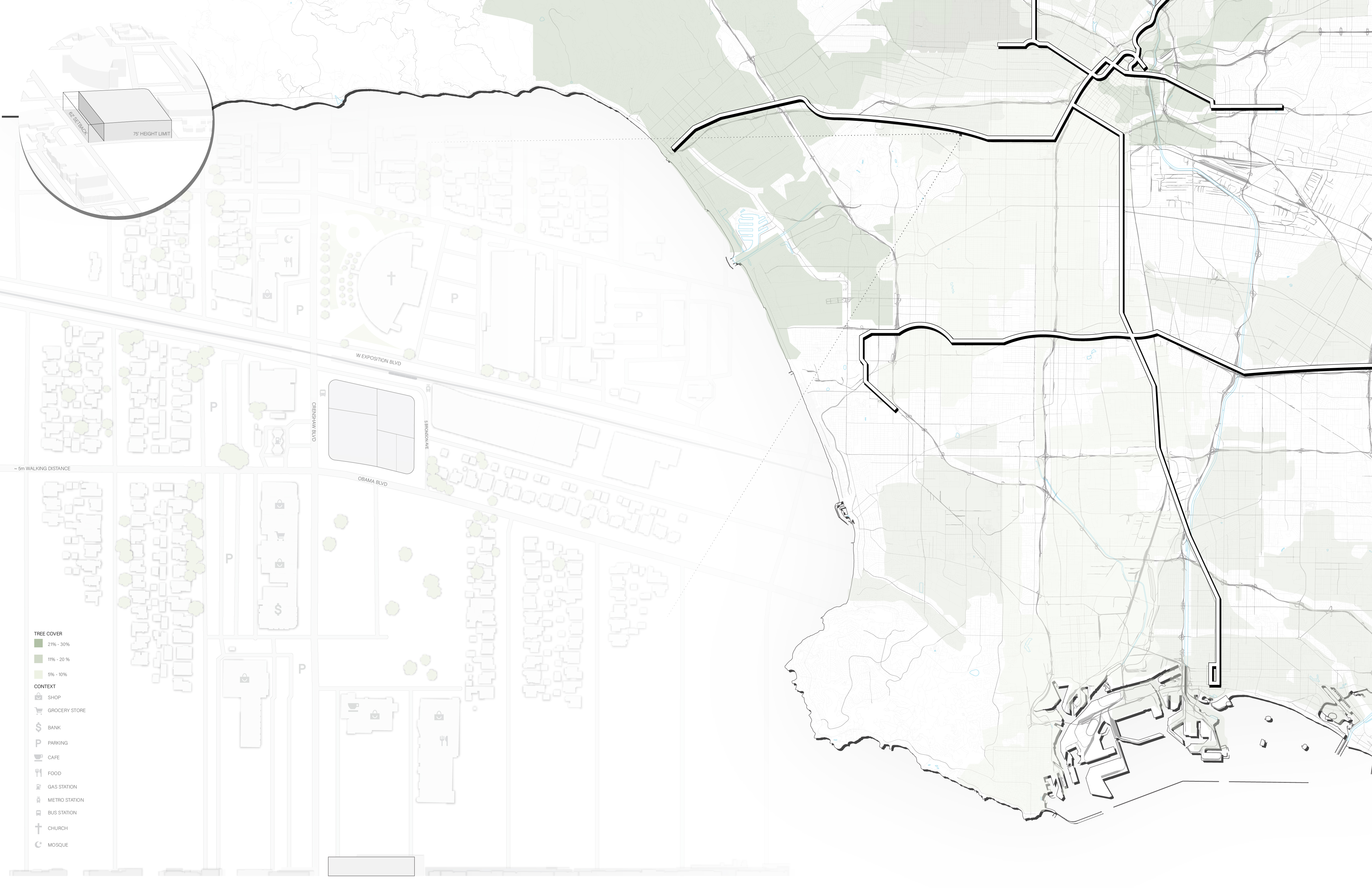
Site Analysis
Environmental Study: Sun, Wind and Sound Analysis

Project
Technical Drawings
Schematic Diagrams

Technical Drawings
Section Perspectives

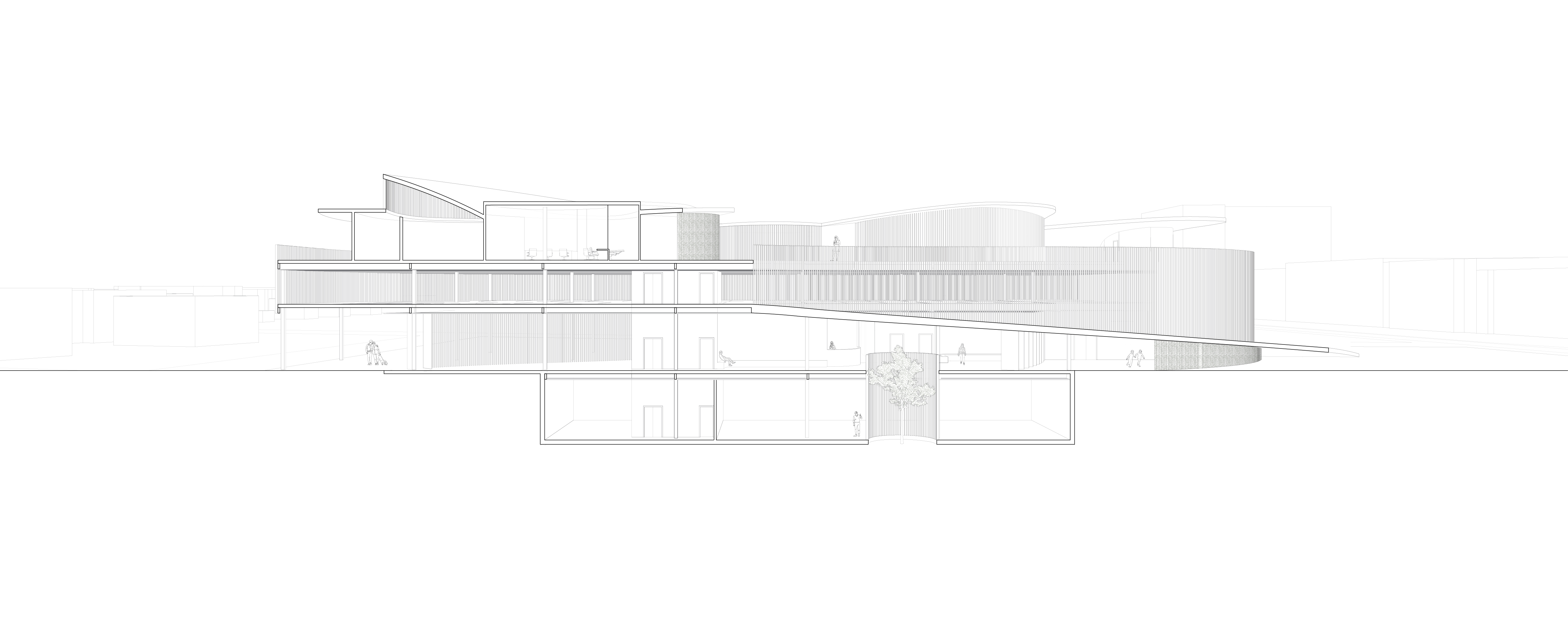
Technical Drawings
Detailed Section Cut

Renderings
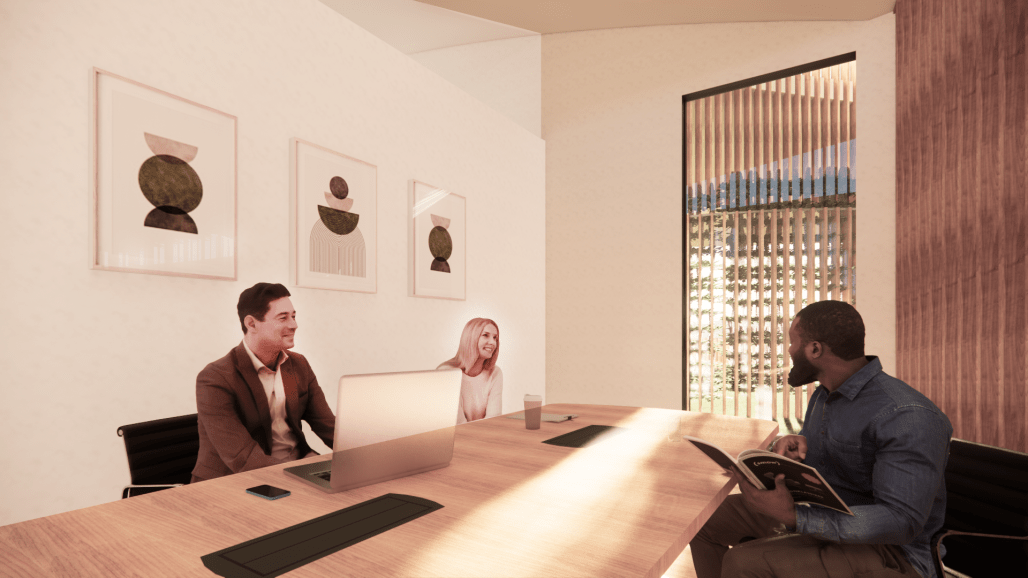
Perspective Views



 Shadan Mirzaei